
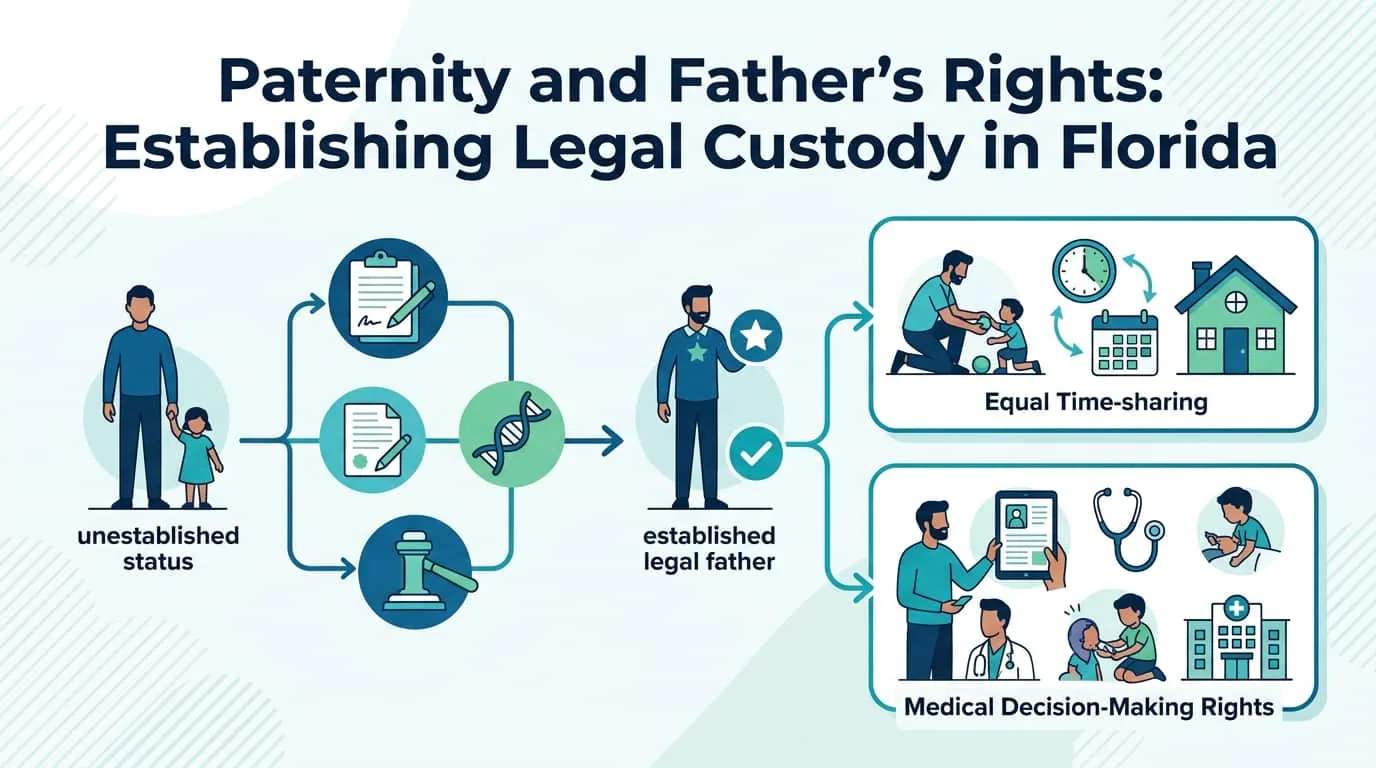
Signing a birth certificate in a hospital room doesn't automatically grant you enforceable custody rights in Florida. For unmarried fathers in Orlando and across Central Florida, the harsh reality is that without legal action, the mother retains 100% of custody by default. You need to establish legal paternity to protect your relationship with your child. If you need help securing your parental rights right now, contact Frank Family Law Practice at (407) 629-2208.
What Does Paternity Legally Mean in Florida?
Legal paternity in Florida means the court officially recognizes a man as the biological and legal father of a child. Under Chapter 742 of the Florida Statutes, this recognition grants you the right to seek custody, timesharing, and decision-making authority. It transforms a biological connection into an enforceable legal relationship.
If you are married when the baby is born, Florida law presumes you are the legal father. For unmarried parents, you must take specific legal steps to transition from presumed or acknowledged paternity to fully adjudicated paternity. Our attorneys regularly see fathers in Winter Park face heartbreak because they assumed biological proof was enough to secure their rights.
Why Is Establishing Paternity Crucial for Fathers?
Establishing paternity gives you the legal right to enforce timesharing and share in major decisions about your child's education, healthcare, and religion. Without an official court order, you cannot legally demand visitation if the mother decides to withhold access to your child.
We have seen this happen repeatedly in our family law practice Winter Park, Florida. A father actively raises a child for years, only to be locked out of the child's life following a relationship breakdown. Beyond securing your rights to see your child, establishing paternity benefits the child by providing access to your medical history, health insurance, and inheritance. A formal legal relationship gives your child a sense of identity and a connection to both parents.
How Do You Establish Paternity in Florida?
You can establish paternity in Florida through a voluntary acknowledgment of paternity or a court-ordered petition. The voluntary affidavit is usually signed at the hospital, but a court order is required to actually establish an enforceable parenting plan and timesharing schedule.
Signing the Florida Department of Revenue's Affidavit of Paternity form is a good first step. It puts your name on the birth certificate. This administrative form does not automatically grant you custody rights. To get guaranteed timesharing, you must file a Petition to Establish Paternity. During this process, the court often requires a genetic DNA test. This test typically costs between $300 and $500. Court proceedings can take anywhere from three to nine months to complete, depending on whether the mother contests the action.
What Are Father's Rights Regarding Custody in Florida?
Florida law does not favor the mother in custody disputes. Courts start with the presumption that 50/50 equal timesharing and shared parental responsibility are in the best interests of the child. You have an equal right to spend time with your kids.
In a typical arrangement, both parents share the authority to make major life decisions for the child. The state requires a detailed parenting plan that outlines communication rules, holiday schedules, and daily tasks. If one parent poses a danger to the child, a judge might grant sole parental responsibility, but this is rare. When couples separate, working with an experienced divorce attorney helps ensure your parenting plan fits your specific work schedule and protects your relationship with your children.
Can You Challenge or Modify Paternity Orders?
You can modify Florida paternity and timesharing orders if you prove a substantial, material, and unanticipated change in circumstances. Challenging a paternity determination is incredibly difficult and typically must occur within 60 days of signing a voluntary acknowledgment.
If you discover you are not the biological father after signing the affidavit, you must file a petition to disestablish paternity immediately. Courts strictly enforce these deadlines. Modifying an existing timesharing schedule is common when a parent relocates, changes jobs, or experiences a significant shift in lifestyle. For instance, if you move from Downtown Orlando to Lake Nona, the court can adjust the parenting plan to accommodate the new driving distance and school zones.
How Does Legal Counsel Help in Paternity Cases?
A local family law attorney ensures your petition is filed correctly, drafts a comprehensive parenting plan, and represents your best interests in front of a judge. Navigating the complex paperwork alone often leads to delays and unfavorable timesharing arrangements.
Family court rules are rigid. Missing a 20-day response deadline can result in a default judgment against you. In our family law practice Winter Park, Florida, we frequently assist fathers who tried to handle their own cases and ended up with less than 20% timesharing. We step in to secure fair schedules and protect your rights. Frank Family Law Practice offers the experience necessary to handle these sensitive cases properly.
What Are Common Misconceptions About Father's Rights?
The biggest myth is that Florida courts always award primary custody to mothers. The law is entirely gender-neutral. Another dangerous misconception is that paying child support automatically grants you the right to see your child.
Child support and timesharing are completely separate legal issues. You can pay thousands of dollars in support and still have zero legal right to visitation if you have not established a formal parenting plan. Our family law practice Winter Park, Florida aggressively fights these misconceptions in the courtroom. We ensure fathers receive the 50/50 timesharing presumption they deserve under state law.
Securing Your Role as a Father in Central Florida
Take proactive legal steps today to protect your relationship with your child. Florida law supports fathers who want to be actively involved in their children's lives, but you have to assert those rights formally in court. You don't have to face the legal system alone. Contact Frank Family Law Practice at (407) 629-2208 to schedule a consultation with our experienced team.