
Mental health issues come up in Orlando family court cases more often than most people expect. When a couple with children separates here in Central Florida, a judge doesn't just look at finances or living situations. They look at the psychological fitness of each parent—and that evaluation can directly shape custody outcomes. If you or your spouse is facing a mental health-related issue during divorce proceedings, getting the right legal support early makes a real difference. Call Frank Family Law Practice at (407) 629-2208 to speak with an attorney today.
How Does Florida Law Address Mental Health in Custody Cases?
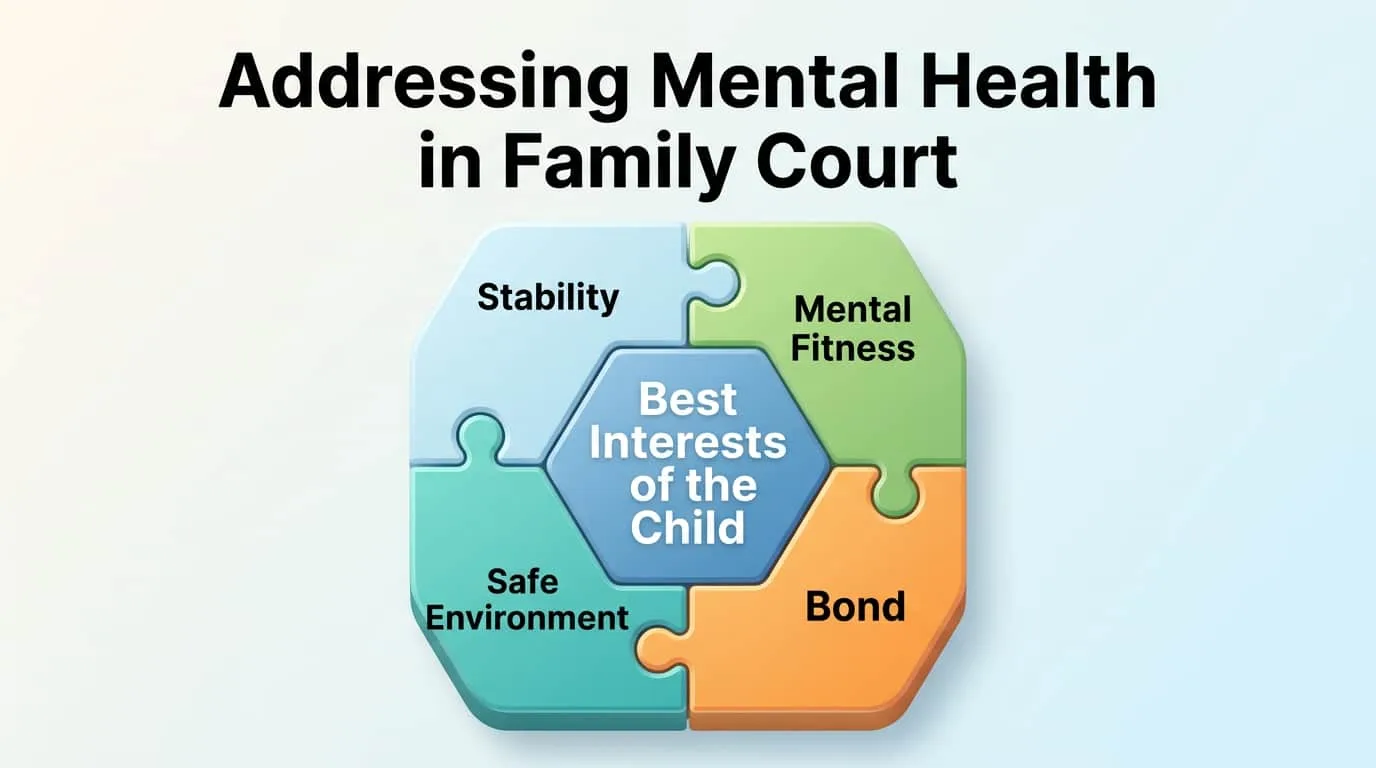
Under Florida Statute Section 61.13, judges determine custody and time-sharing arrangements based on the "best interests of the child." Mental health is one of the factors courts explicitly consider. A parent's mental and physical health, their ability to maintain a stable home environment, and their demonstrated history of parenting all carry real weight in court.
This means that if one parent struggles with untreated depression, anxiety disorders, or a personality disorder that affects their parenting, the other parent has the legal standing to raise those concerns. Judges in Orange County take these claims seriously—but they also require evidence, not just accusations.
What Is a Psychological Evaluation in Family Court?
A court-ordered psychological evaluation is a formal assessment conducted by a licensed mental health professional, typically a clinical psychologist. In Central Florida family court, judges order these evaluations when there's a genuine dispute about a parent's psychological fitness or when allegations of mental illness could affect a child's safety.
The process usually takes 4 to 8 weeks to complete. Costs range from $1,500 to $5,000 depending on the complexity of the evaluation and the professional conducting it. The evaluator interviews both parents, reviews records, and may speak with teachers, pediatricians, or other third parties. Their report goes directly to the judge and carries significant influence over the final parenting plan.
A skilled family law practice in Orlando, Florida knows how to prepare clients for these evaluations—what to expect, how to present themselves honestly, and how to respond if the findings are disputed.
How Does the Court Handle Substance Abuse and Domestic Violence?
High-conflict cases involving substance abuse or domestic violence require a different approach entirely. Florida courts take both issues extremely seriously, and rightfully so.
When substance abuse is a concern, judges can order random drug testing during proceedings. If a parent tests positive, the court may restrict their time-sharing or require supervised visitation until they can demonstrate sustained sobriety—often for 6 to 12 months. Courts look favorably on parents who proactively seek treatment and can document their progress.
Domestic violence cases involve additional legal considerations. A parent with a domestic violence injunction against them faces a legal presumption under Florida law that it's not in the child's best interest for that parent to have majority time-sharing. This presumption can be overcome, but it requires strong evidence and a clear showing that the child's safety won't be compromised. Our attorneys at Frank Family Law Practice have helped Orlando families work through these situations, including families in communities like Winter Park and Dr. Phillips where these cases can involve significant assets and complex parenting dynamics.
What Supervised Visitation Resources Are Available in Orlando?
When a court orders supervised visitation, it isn't punishment. It's a protective measure designed to keep the child safe while preserving the parent-child relationship.
Supervised visitation centers in the Orlando area provide neutral settings where a trained monitor observes the visit and documents everything that takes place. Sessions typically cost between $35 and $75 per hour. Courts can also approve a mutually agreed-upon third party—a grandparent or trusted family friend—to serve as supervisor in some cases.
Therapeutic supervised visitation goes a step further. A licensed therapist facilitates contact between the parent and child, working to rebuild trust and address underlying issues. This option is particularly valuable when mental illness, substance abuse recovery, or domestic violence history is part of the picture. Judges appreciate when parents proactively arrange these services rather than waiting to be ordered.
Our attorneys advise clients to document every supervised visit thoroughly. Dates, times, what was discussed, and the child's demeanor all matter if the case returns to court for a modification.
How Do You Document Mental Health Concerns as Legal Evidence?
Documenting mental health concerns properly is one of the most practical things you can do to protect your position in a Florida custody case. Here's what actually holds up in court:
Medical and therapy records. Obtain releases where possible. A treating therapist's records showing a diagnosis, treatment history, and compliance (or non-compliance) with treatment carry real weight.
Incident reports and law enforcement records. If police were called to the home, those reports become part of the record. Even a single documented incident of erratic behavior can be relevant.
Written communications. Emails, text messages, and voicemails that show alarming behavior, threats, or unstable communication patterns can be preserved and submitted as evidence. Don't delete them.
Third-party observations. Teachers, coaches, pediatricians, and neighbors can sometimes provide declarations or testimony about what they've observed in the child or the parent. These accounts are more credible when they come from people who had regular contact with the family.
A parenting journal. Keep a dated, factual log of incidents that concern you. Stick to observable facts—what you heard, what you saw, what the child said when they returned from a visit. A consistent, calm, factual record is far more persuasive than emotional accusations.
Working with a family law practice in Orlando, Florida that understands what judges in Orange County find persuasive can help you build a file that's organized, credible, and ready for court.
Can Collaborative Law Work When Mental Health Is a Factor?
This depends heavily on the severity of the mental health issue and the willingness of both parties to engage in good faith.
Collaborative law involves both spouses, their attorneys, and often a neutral mental health professional working together outside of court to reach a parenting agreement. When mental health concerns are manageable and both parents are committed to the process, collaborative law can produce a thoughtful, child-centered outcome in less time than litigation. Most collaborative cases resolve within 4 to 5 meetings.
When one parent's mental health creates a genuine safety risk, or when cooperation simply isn't possible, litigation may be unavoidable. That's where having a divorce attorney with courtroom experience becomes essential. Jennifer Frank, managing partner at Frank Family Law Practice, is Board Certified in Marital and Family Law by the Florida Bar—a credential fewer than 5% of Florida attorneys earn. That level of expertise matters when a judge is evaluating a complex, high-stakes mental health argument.
Ready to Protect Your Children's Best Interests?
Mental health issues in family court don't have to derail your case. With the right documentation, the right resources, and a knowledgeable family law practice in Orlando, Florida on your side, you can present a clear, compelling picture to the court.
Whether you're raising concerns about a co-parent's psychological fitness or responding to allegations about your own mental health, the most important step you can take right now is talking to an attorney who handles these cases every day. Frank Family Law Practice serves families across Central Florida, including Orange County, Seminole County, and surrounding areas. Call us today at (407) 629-2208 to schedule a consultation.